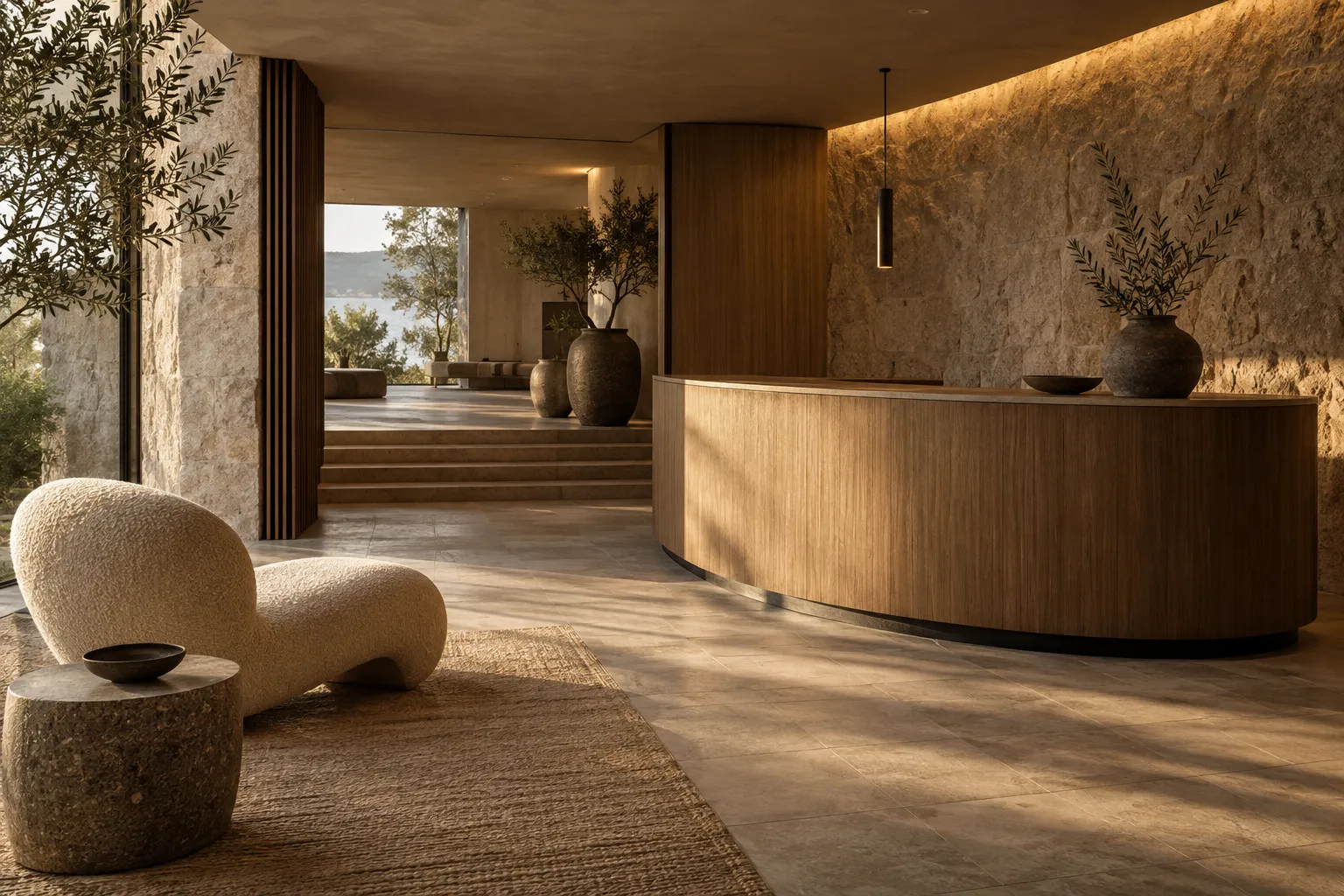
Travel exposes us to rooms designed for unfamiliar routines. The most useful inspiration often comes from modest details rather than dramatic lobbies.
Watch how arrival feels
Notice where bags land, how you find the light switch, and whether the route from door to bed feels clear. A good entry sequence reduces effort. At home, the same lesson may translate into a shelf, hook, bench, or more intuitive lighting control.
Study the room at different times
Morning and evening reveal how well a room manages daylight, privacy, and artificial light. Look for how curtains overlap, where reading lights sit, and whether bedside surfaces are genuinely usable. These observations are more portable than a particular decorative style.
Bring home principles, not replicas
An appealing hotel room may depend on dimensions, climate, and staff maintenance that a home cannot copy. Translate the underlying idea instead: layered light, durable finishes, useful storage, or a pleasing material contrast.
Photograph the detail and note why it works before shopping for a similar object.
These are general design considerations. Product dimensions, materials, installation requirements, and care instructions should be checked with the relevant maker or professional before purchase or work begins.