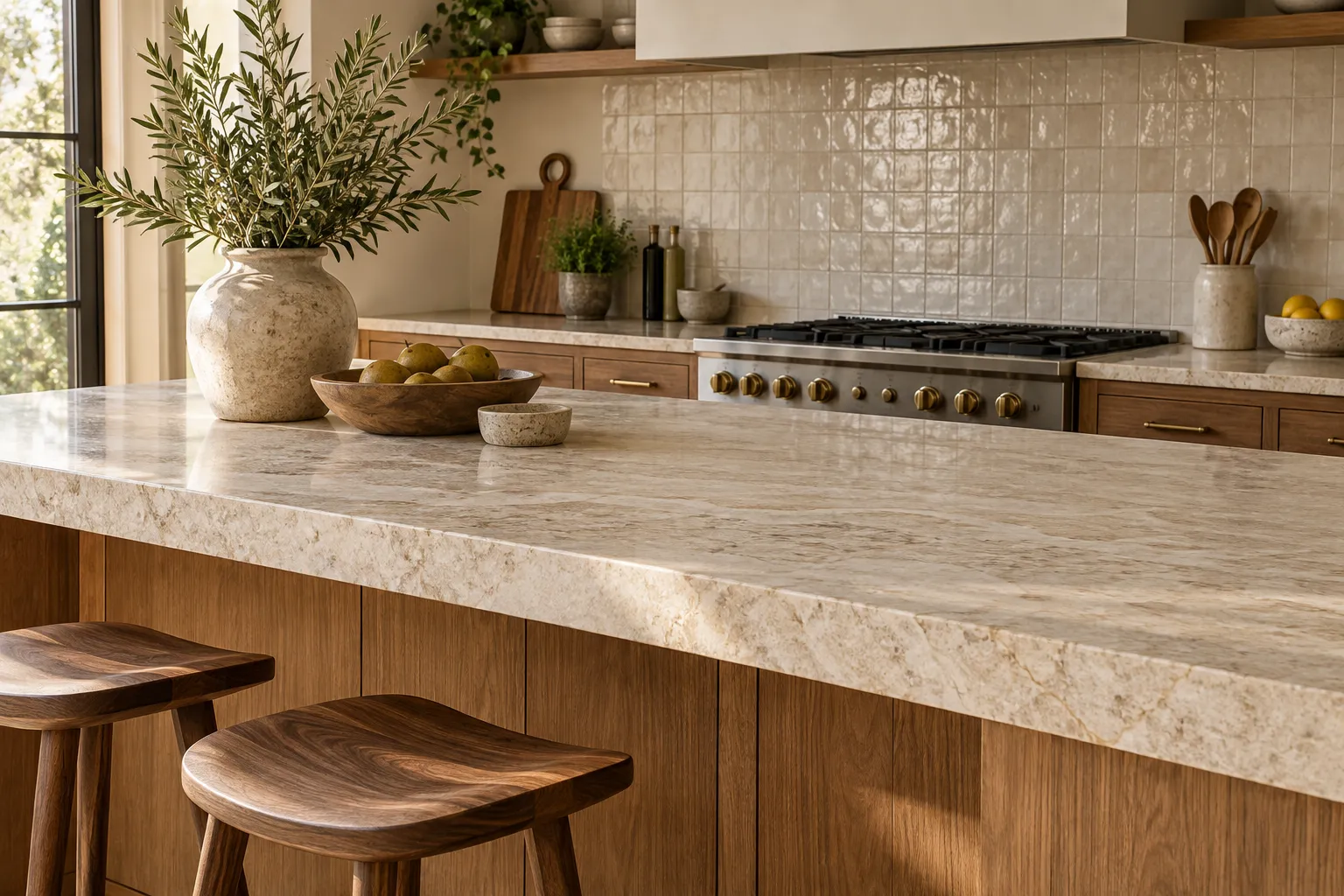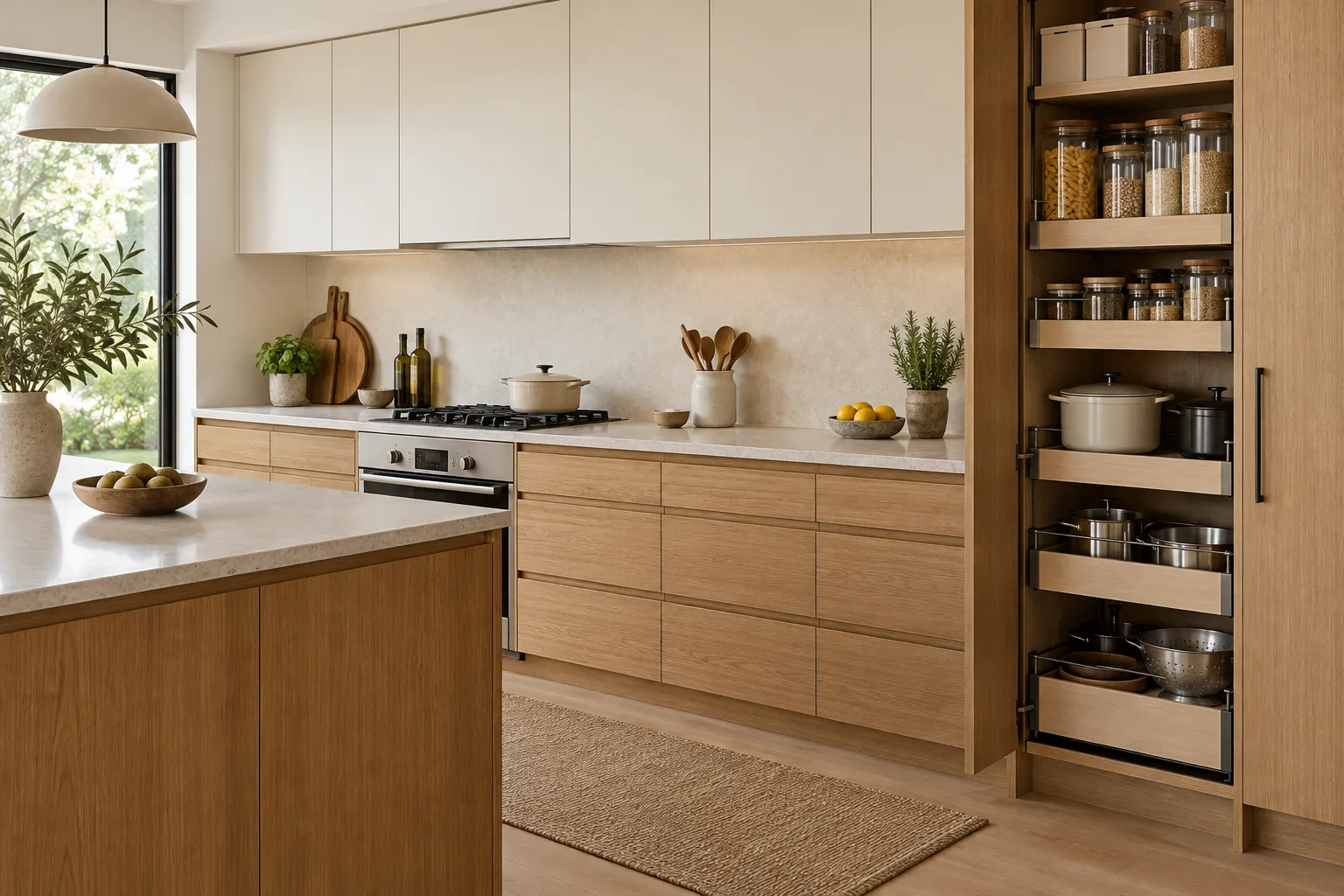
A calm kitchen begins with easy access to the things used most often. The best storage plan is shaped by how food is prepared, served, and cleaned up in that particular household.
Map the work zones
Keep knives and boards near preparation space, pots near the cooking area, and everyday dishes near the dishwasher or sink. Items used once a month can live farther away. This simple hierarchy often improves a kitchen more than adding another cabinet.
Make the depth accessible
Deep cupboards can hide useful space behind other objects. Drawers, pull-out shelves, and transparent containers make contents visible. Before buying organizers, measure the interior width, depth, and hinge clearance, not just the cabinet front.
Leave space for change
Avoid fitting every shelf so tightly that a new pan or appliance has nowhere to go. Open shelving can be beautiful for things used daily, but it also exposes them to dust and grease. Use it deliberately rather than as a universal replacement for closed storage.
Store by task, frequency, and visibility; buy organizers only after measuring the actual cabinets.
These are general design considerations. Product dimensions, materials, installation requirements, and care instructions should be checked with the relevant maker or professional before purchase or work begins.