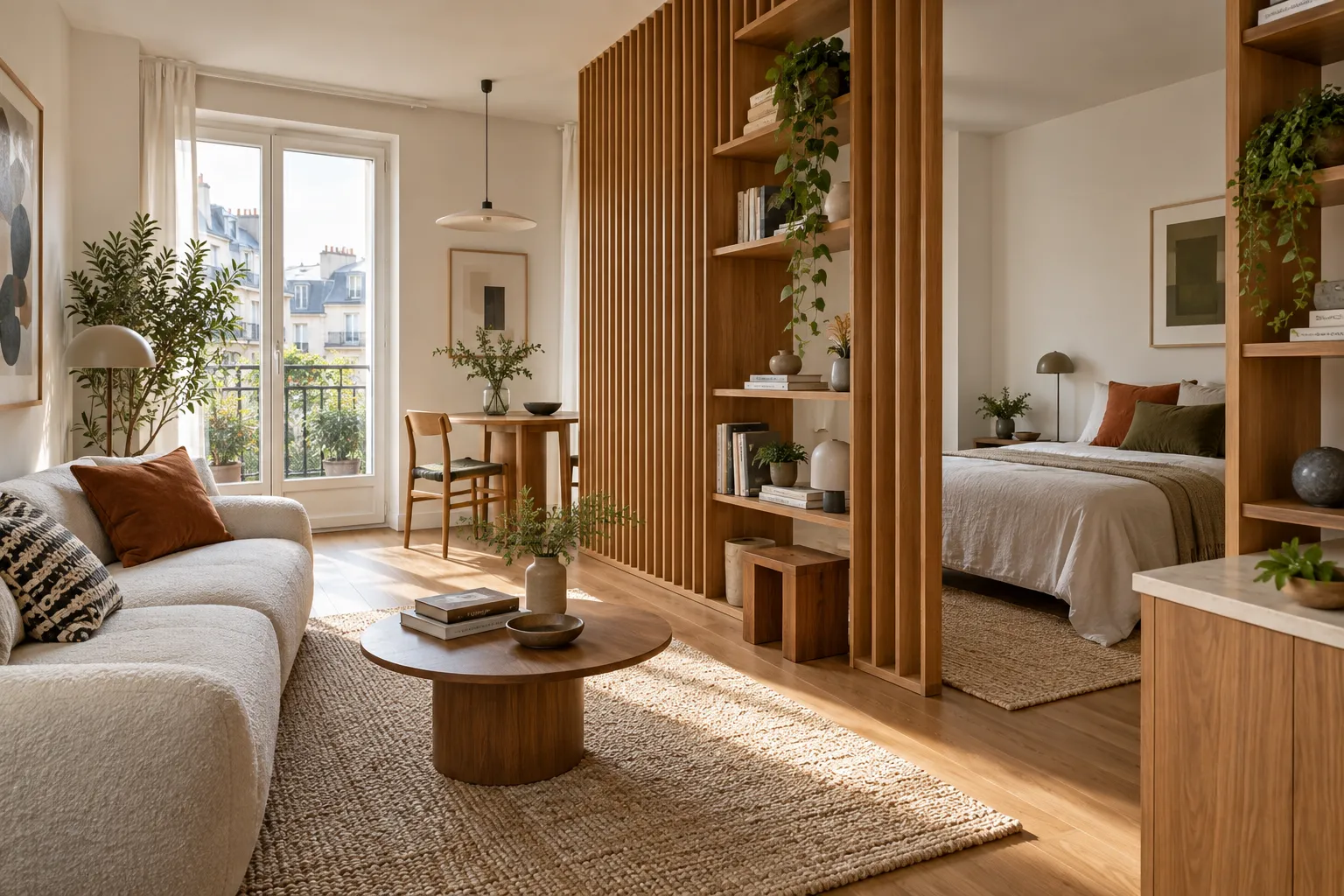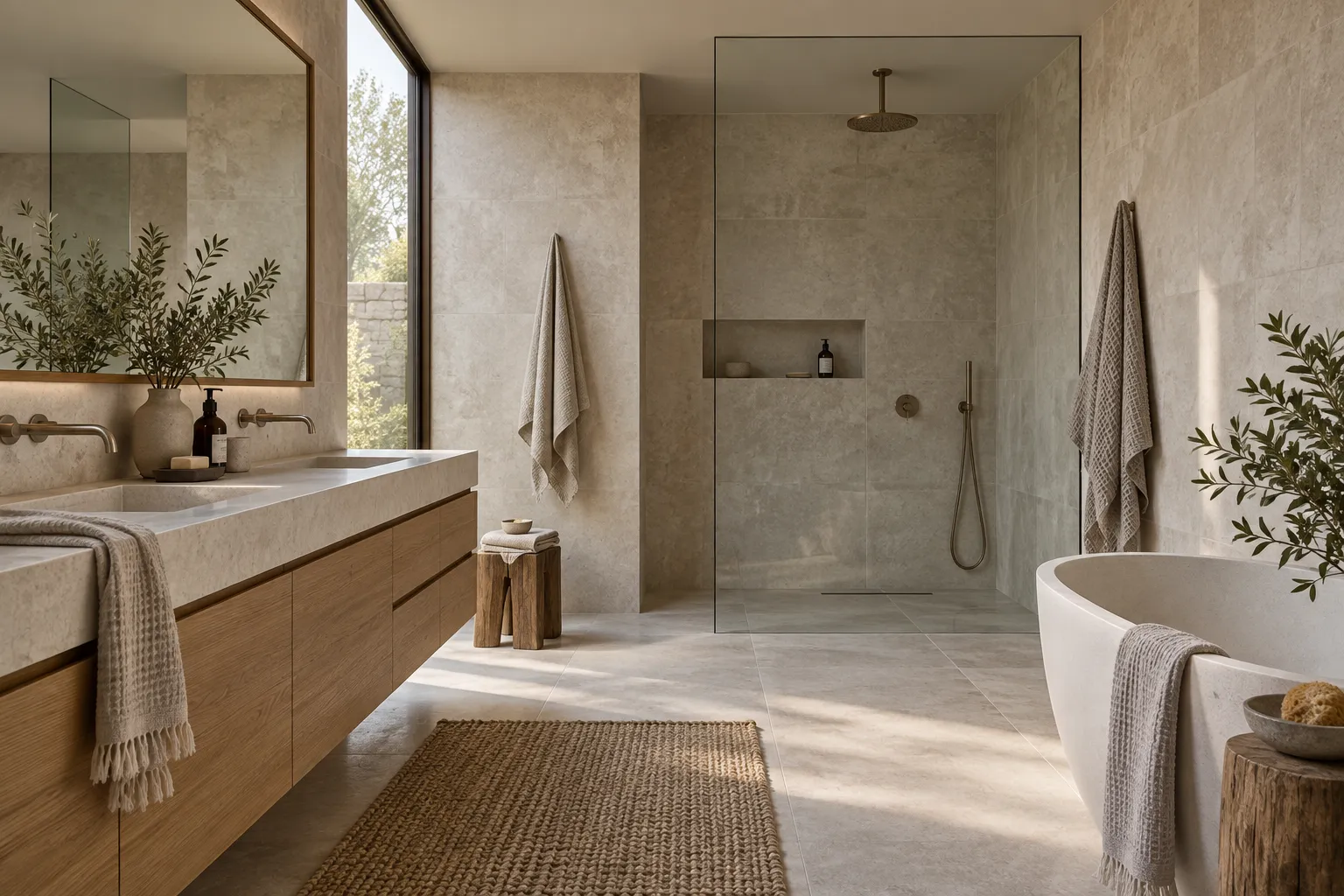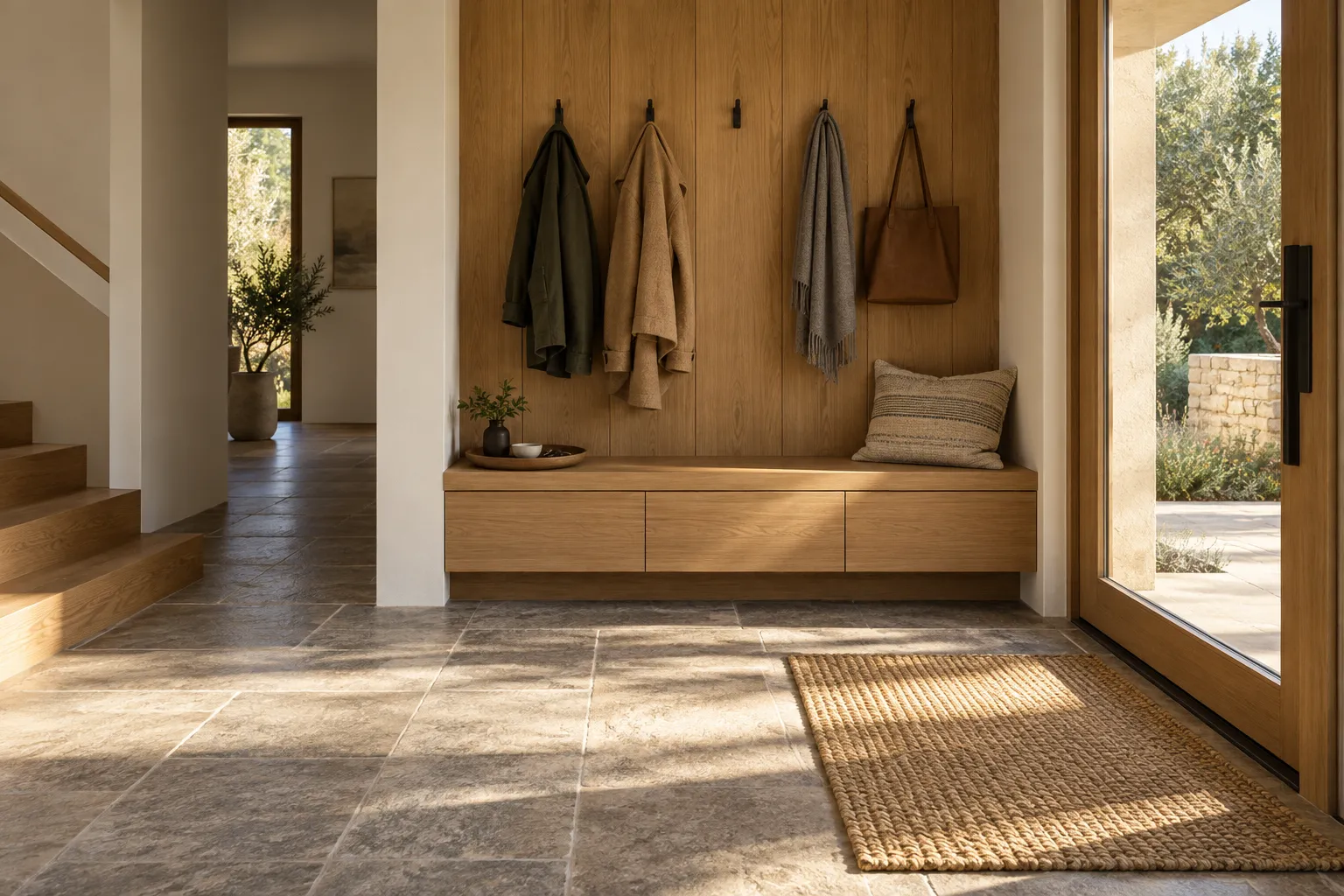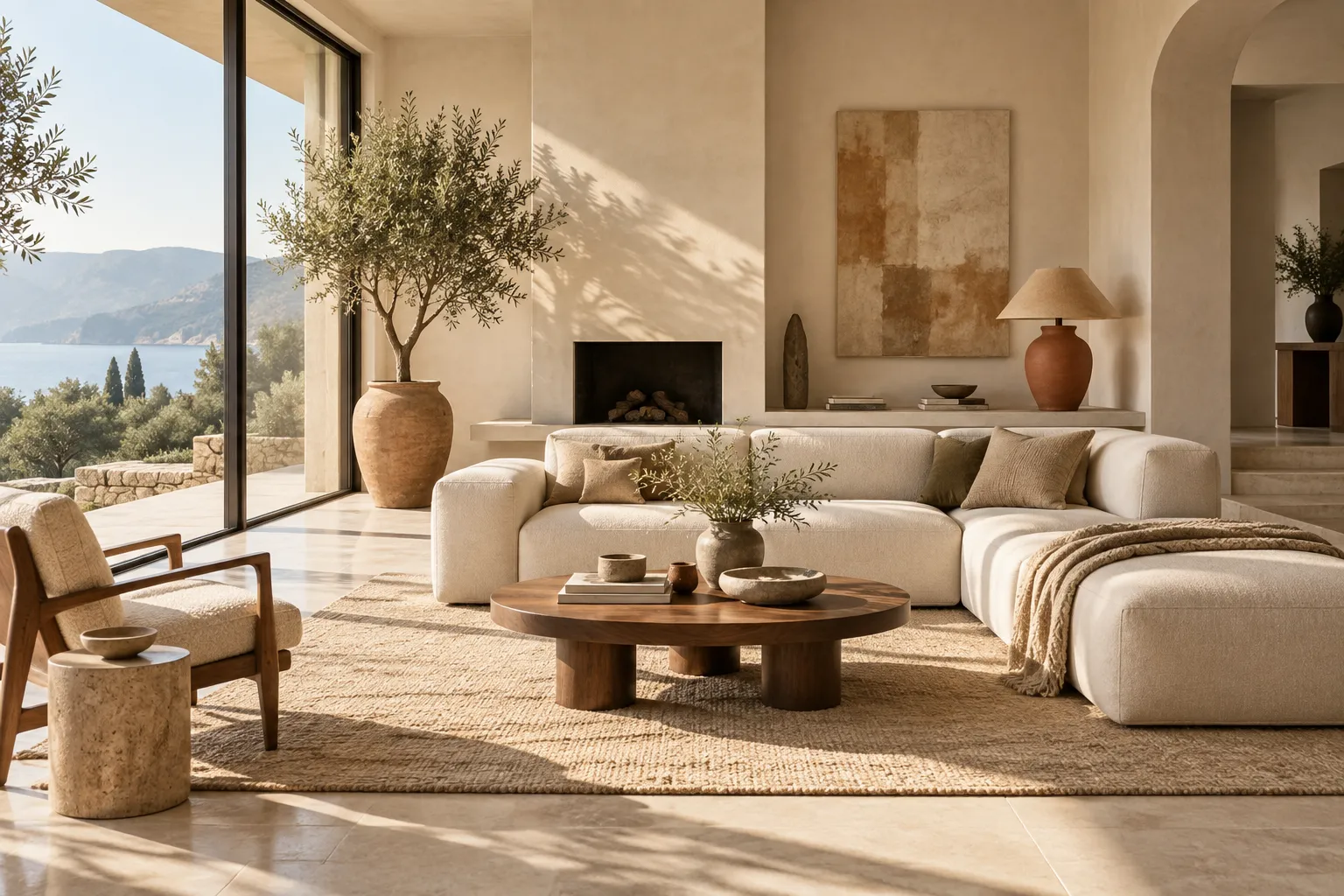
Minimalism works best when it helps a room feel calm without making everyday life disappear. The goal is a clear visual rhythm, comfortable seating, and objects that have a reason to be there.
Begin with the way the room is used
Map the main activities before choosing a sofa or moving a wall. Conversation, reading, television, and circulation each need different clearances. Leave an easy path through the room and choose one generous focal point instead of several small ones competing for attention.
Let materials provide depth
A restrained palette can still feel rich. Pair a matte wall with textured upholstery, a grainy wood table, woven shade, or softly veined stone. Vary the finish as well as the color; identical pale surfaces often make a room look flat.
Edit with comfort in mind
Keep a reading light near a chair, a surface within reach of the sofa, and concealed storage for daily clutter. Use artwork or a single sculptural object to introduce contrast. A room feels finished when it supports real routines as gracefully as it photographs.
Choose one anchoring piece, layer three tactile materials, and make every seat useful.
These are general design considerations. Product dimensions, materials, installation requirements, and care instructions should be checked with the relevant maker or professional before purchase or work begins.