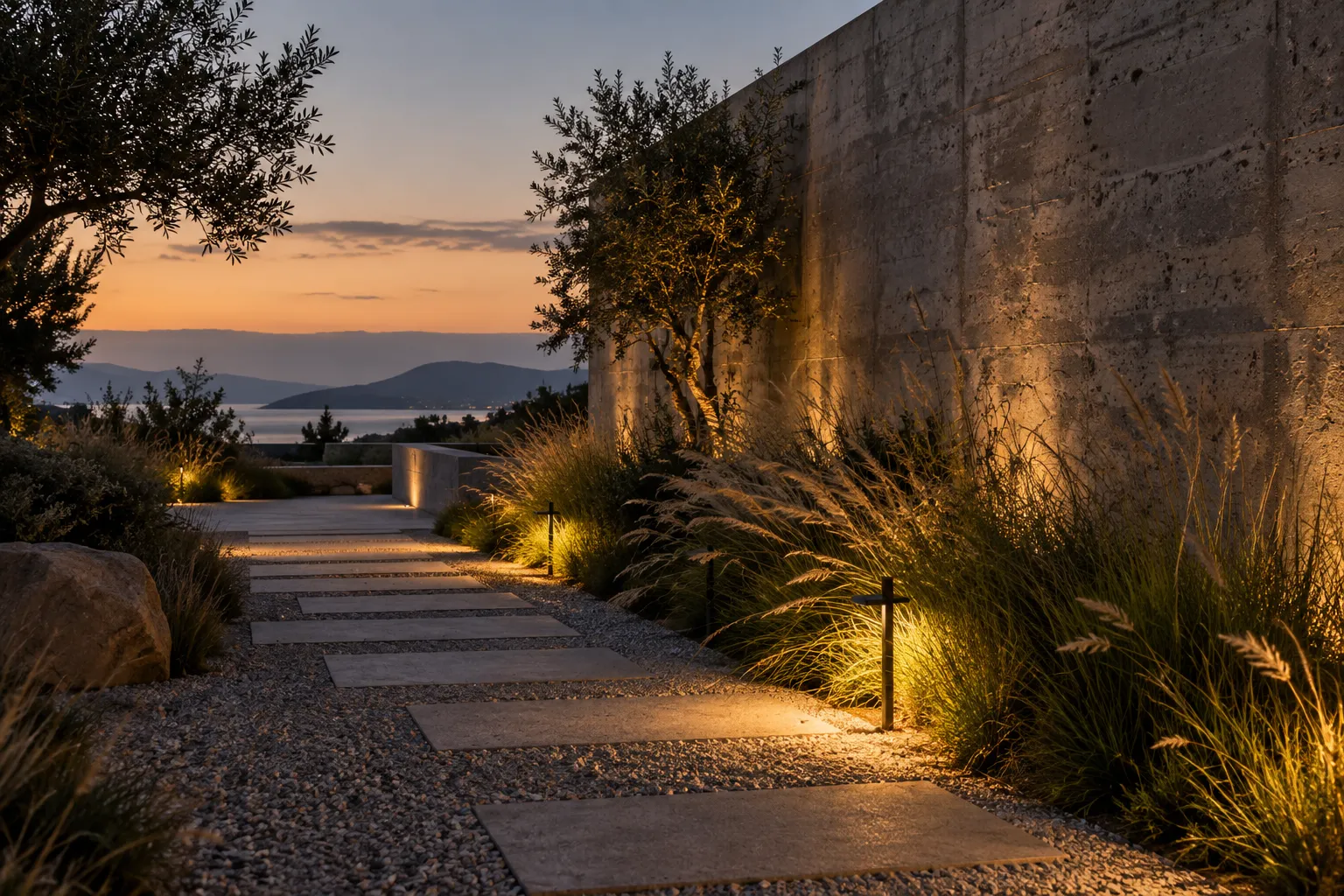
Outdoor lighting is most effective when it reveals what matters: a safe step, a table, a textured wall, or the shape of a tree. More light is rarely the answer.
Light the route first
Steps, changes in level, gates, and entrances need clear visibility. Choose fixtures that direct light toward the ground rather than into people’s eyes or neighboring windows. Test the route at night before adding decorative accents.
Create a few quiet focal points
Low, carefully aimed light can make foliage and architecture readable after sunset. Avoid lighting every plant equally. Darkness between focal points gives the garden depth and preserves its atmosphere.
Specify for outdoor conditions
Check the fixture’s suitability for its exposure, the cable route, and access for maintenance. Use a qualified professional where electrical work is required. Timers and sensors can reduce unnecessary operation, while warmer light is often more comfortable around seating.
Make paths safe, select a few accents, and control spill and operating time.
These are general design considerations. Product dimensions, materials, installation requirements, and care instructions should be checked with the relevant maker or professional before purchase or work begins.