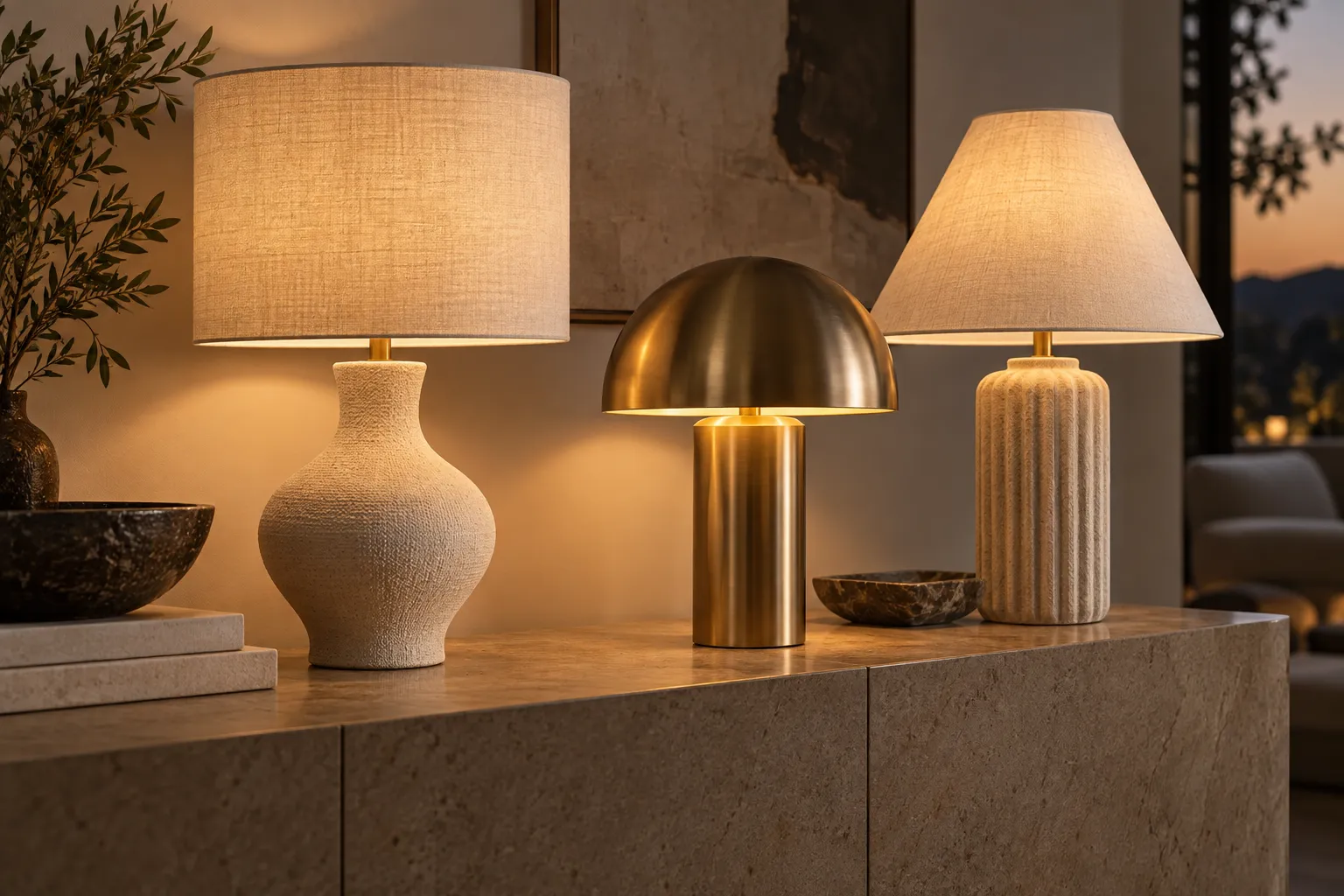
A single bright ceiling fixture is rarely the most comfortable way to light a room. Layers give you a useful level of light where it is needed and softness everywhere else.
Give each light a job
Ambient light supports movement, task light supports focused work, and accent light adds depth. A kitchen may need ceiling light for cleaning, under-cabinet light for preparation, and a warmer pendant over the table. The same logic applies to bedrooms and living rooms.
Think about direction and glare
A beautiful fixture can still be unpleasant if the bulb is visible from a seated position. Try a shade, diffuser, or reflected light where direct glare would be distracting. Place reading lamps to illuminate the page without casting a shadow from your shoulder.
Control each layer separately
Dimmers or independent switches let the room adapt from work to dinner to late evening. Check fixture and bulb compatibility before buying dimming hardware. Consistent color temperature within a room tends to feel more settled than a mix of very cool and very warm bulbs.
Plan for three kinds of light and make each independently controllable.
These are general design considerations. Product dimensions, materials, installation requirements, and care instructions should be checked with the relevant maker or professional before purchase or work begins.