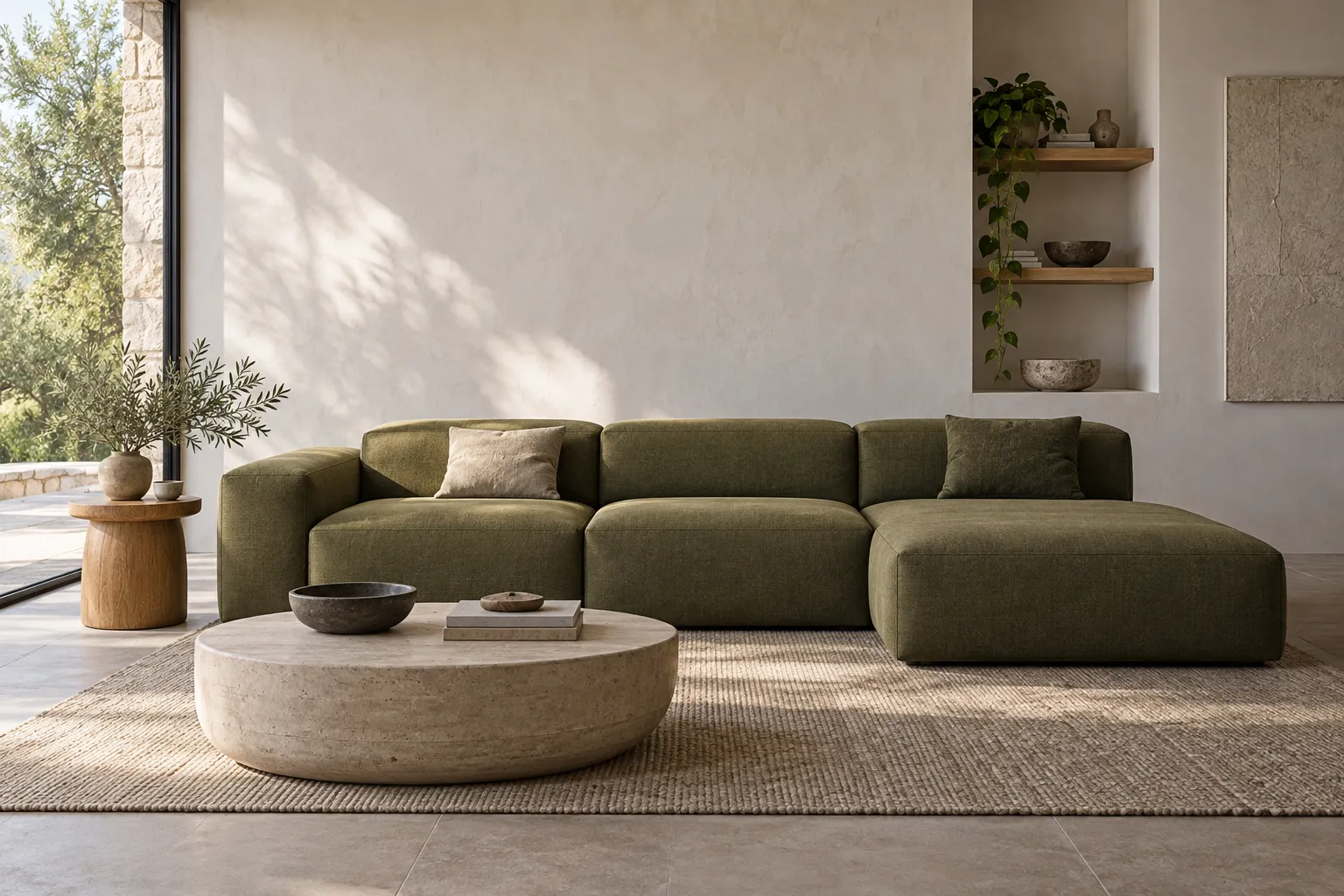
A sofa is often the visual anchor of a living room and one of its hardest working objects. Choose it for the bodies and habits that will use it, not only for its outline.
Measure the room and the route in
Mark the sofa footprint on the floor and check the remaining paths to doors and tables. Measure the entry, stairs, and turns the sofa must pass through on delivery. A modular design can solve an access problem, but only if the modules fit individually.
Test posture, not just softness
Seat depth, back angle, arm height, and cushion resilience determine whether lounging and conversation are comfortable. Taller users and shorter users may need different depths. If testing in person is impossible, compare exact dimensions with a sofa you already know.
Choose upholstery for the household
Ask about cleaning instructions, removable covers, fabric composition, and replacement parts. Texture can hide minor wear, while very delicate weaves may be less forgiving around pets or frequent use. Look for transparent construction information rather than relying on a vague durability claim.
Check dimensions and access, compare seat geometry, and read care information before choosing color.
These are general design considerations. Product dimensions, materials, installation requirements, and care instructions should be checked with the relevant maker or professional before purchase or work begins.