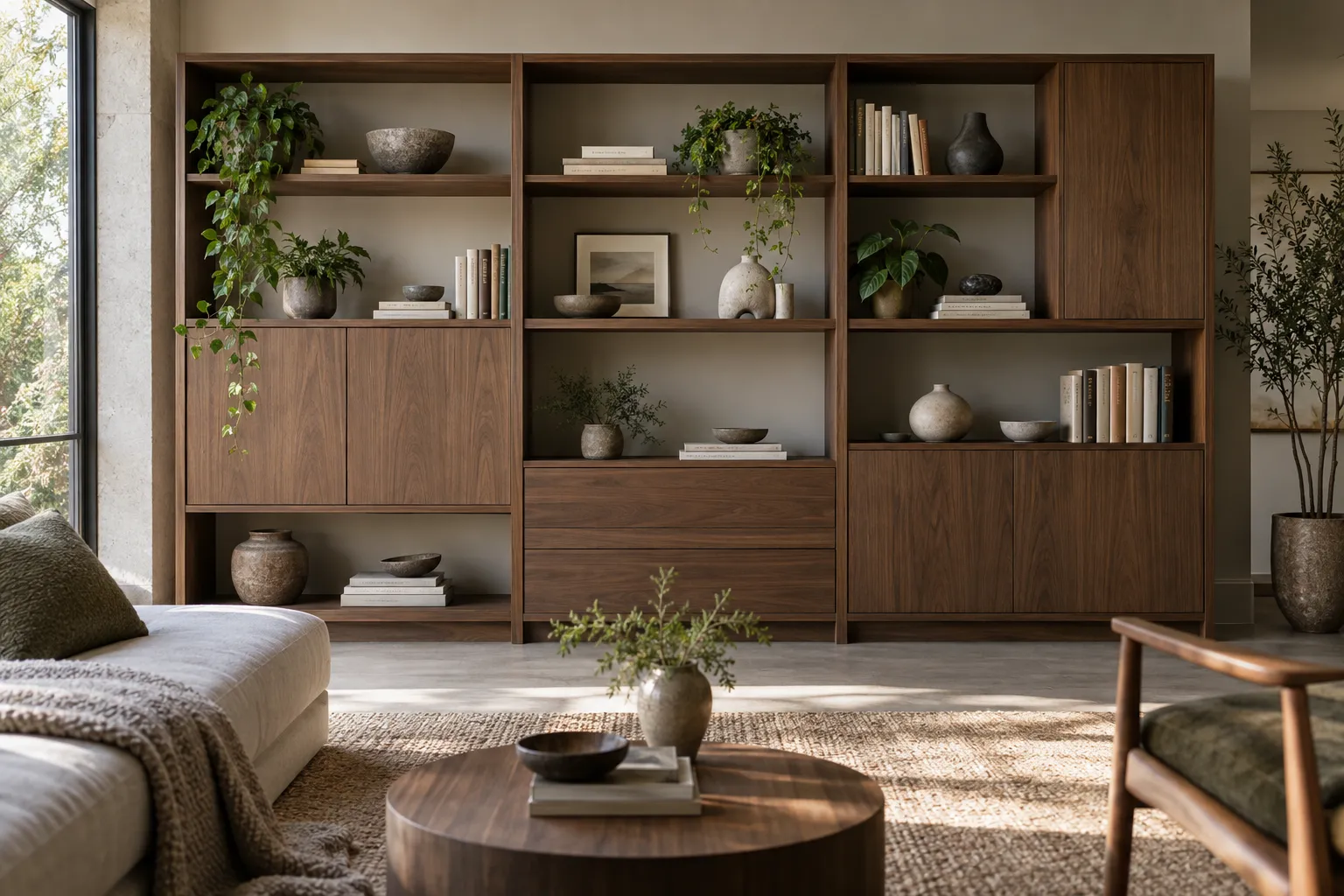
Modular shelving promises adaptability, but its long-term value depends on dimensions, stability, and replacement parts. Choose a system around the things you actually own.
Measure the contents
Books, records, plants, ceramics, and files all need different heights and depths. Make a rough inventory before specifying modules. Leave some open space so the arrangement can change without looking overcrowded.
Understand the structure
Check load ratings, wall construction, anchoring requirements, and whether shelves can be reconfigured without specialist tools. Freestanding units may still need anti-tip restraint. If a system will move with you, verify that disassembly and reassembly are supported.
Compose the wall
Mix closed storage for visual clutter with open shelves for frequently used or meaningful objects. Keep the heaviest items low. A restrained rhythm of shelf heights tends to read as architecture rather than a collection of boxes.
Buy for your real objects, confirm structural requirements, and reserve room to rearrange.
These are general design considerations. Product dimensions, materials, installation requirements, and care instructions should be checked with the relevant maker or professional before purchase or work begins.